Trump’s China visit and Washington’s failure to bring Beijing into alignment on Iran
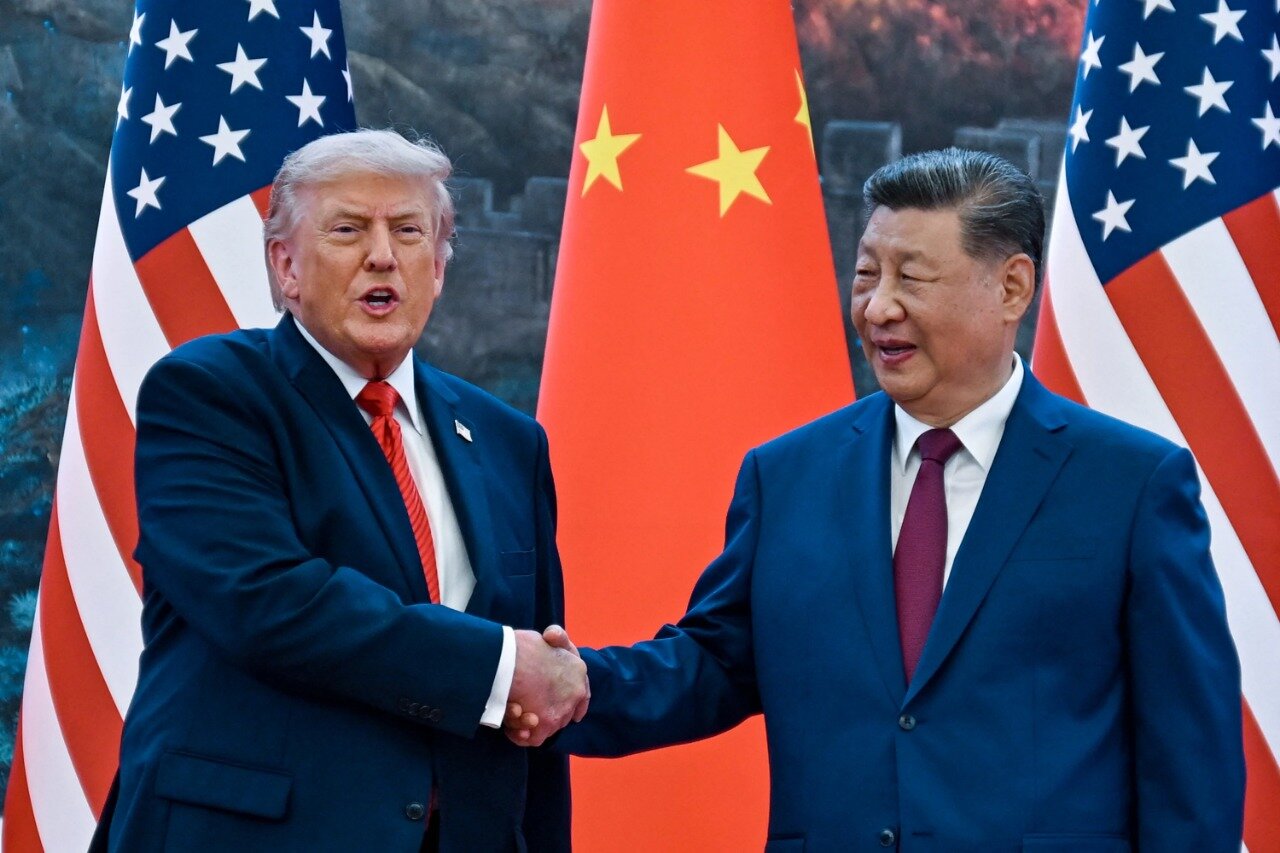
TEHRAN - The recent visit of Donald Trump to China can be seen as one of the most complex moments in Washington–Beijing relations in recent years. On the surface, the trip was framed around recalibrating bilateral ties, managing strategic competition, and discussing global stability.
However, in its deeper layers, it also carried a set of geopolitical objectives, one of the most important being Washington’s effort to secure China’s cooperation on the Iran file and the broader security architecture of the Middle East. Yet a careful reading of official Chinese statements and the broader tone of politically aligned commentary indicates that this objective was not only left unfulfilled but also fundamentally met with structural non-acceptance by Beijing.
At the first level of analysis, it is important to understand how China itself frames the visit. From Beijing’s perspective, the meeting was neither a turning point for reshaping the global order nor a platform for bargaining over regional dossiers.
Rather, it was seen as part of an ongoing process of managing competition between major powers. In this framework, China–US relations are inherently dual in nature: on one hand, a long-term structural rivalry, and on the other, the necessity of maintaining stability and preventing escalation beyond controllable limits. Accordingly, any attempt to introduce third-party issues—particularly sensitive regional files such as Iran—into direct bilateral bargaining is inherently constrained.
At the second level, the political and diplomatic language used to describe international issues plays a crucial role. In this discourse, regional crises, including the situation surrounding Iran, are not framed as bilateral matters between Tehran and Washington, but rather as structural disruptions within the global order. These disruptions are linked to broader domains such as energy security, supply chain stability, global trade, and international economic growth. Such framing effectively shifts the issue away from the realm of bilateral political alignment with the United States and elevates it into a multilateral and structurally complex domain that cannot be reduced to a single bilateral negotiation.
Within this framework, the logic of solutions also changes. Whereas the American approach is generally grounded in instruments such as political pressure, sanctions, or coalition-building, the Chinese perspective emphasizes dialogue, de-escalation, and the avoidance of military confrontation. This difference is not merely tactical; it reflects fundamentally different understandings of how the international order should be governed. On one side lies an approach centered on strategic alignment through targeted coalitions, while on the other lies an emphasis on multilateralism and opposition to unilateral action.
The natural outcome of this divergence is that China does not enter into coalition logic against Iran, as such a framework is seen as inconsistent with its core foreign policy principles.
At the third level, Iran’s position within China’s strategic calculations must be considered. Iran is not merely a negotiable foreign policy file at the bilateral level; rather, it is embedded within a broader network of geopolitical and economic considerations. These include energy security, international trade routes, regional balance in the Middle East, and the broader effort to consolidate a multipolar global order. Within this structure, relations with Iran are not a variable dependent on China–US relations, but rather a relatively independent component of China’s foreign policy architecture. This relative autonomy ensures that even under conditions of high-level dialogue or external pressure, no fundamental shift in this relationship is likely to occur.
From another perspective, although a significant portion of Trump’s visit appeared to focus on economic, technological, and bilateral competition management issues, this emphasis does not imply that the Iran file was peripheral. On the contrary, Iran remained one of the key and determining elements of the broader agenda. From Washington’s point of view, China is one of the few actors capable of exerting real influence over Iran, whether through energy channels, political leverage, or its regional role in the Middle East order.
Consequently, the United States expected at least a degree of tactical flexibility or limited alignment from Beijing on Iran-related policies within the broader framework of high-level discussions.
However, what ultimately unfolded indicates that this expectation did not translate into any meaningful level of agreement or even convergence. China did not offer any concrete commitments regarding changes in its approach toward Iran, nor did it allow the Iran issue to be structurally linked to other areas of negotiation. As a result, the Iran file shifted from a potentially negotiable issue to a structural point of divergence, eliminating any possibility of transforming it into a shared diplomatic outcome.
In this context, one of the implicit objectives of the visit appears to have been the creation of a form of multilateral pressure mechanism on Iran through coordination with China.
Yet the outcome of the trip demonstrates that such a mechanism failed to materialize. Beijing showed no indication at either the rhetorical, diplomatic, or behavioral level of accepting such a role. Even when broader discussions touched on the Middle East or regional security, China consistently maintained its position within the general framework of “political resolution of crises,” avoiding any specific or interpretable commitment aligned with a pressure-based approach.
This lack of alignment was not merely a tactical disagreement, but rather reflects a structural limitation in China–US relations. From Beijing’s perspective, Iran does not fall within the category of issues that can be traded within bilateral bargaining with Washington. Instead, it is directly tied to China’s long-term interests in energy security, trade connectivity, and its role in a multipolar international system. Therefore, even at the height of high-level negotiations, there was no space for redefining China’s position on Iran in line with US expectations.
As a result, contrary to Washington’s initial expectations, Trump’s visit did not lead to the establishment of any shared framework regarding Iran. It instead highlighted the limited potential for converting this issue into a bilateral bargaining tool. China effectively demonstrated that it is unwilling to define its foreign policy toward Iran as a function of its relationship with the United States even at the highest levels of diplomatic engagement.
At a deeper level, this outcome reflects a broader divergence in the logic of decision-making between the two powers. From the American perspective, great power relations can simultaneously include economic cooperation and coordinated action on regional security issues. From the Chinese perspective, however, these domains are strictly separated. Economic and technological cooperation can expand, but it does not translate into participation in the geopolitical or security strategies of the other side. This separation ensures that even when bilateral relations are managed and stabilized in certain areas, files such as Iran remain outside the logic of mutual bargaining.
At the broader systemic level, the current structure of the international order further reinforces this limitation. In a multipolar system, great powers are no longer able to easily shape each other’s behavior in regional dossiers. This reduces the capacity of the United States to transform global issues into binding coalition frameworks. In such an environment, even when a major power seeks coordination on a file such as Iran, it inevitably encounters the structural resistance of another power’s independent strategic interests and decision-making autonomy.
Therefore, the final outcome of the visit in this dimension is clear: the Iran file did not enter the realm of agreement, did not reach the level of understanding, and was not even defined within a shared future pathway. What remains is the persistence of two distinct and independent perspectives on a single regional crisis, one in which the United States seeks multilateral pressure coordination, and another in which China insists on strategic autonomy and non-participation in pressure-based coalitions. And as analysts and broader commentary have also suggested, Trump ultimately returned to the United States without achieving any tangible breakthrough, marking yet another moment in the broader narrative of shifting global influence.
Leave a Comment